

SustAIned Future: AI eats the electron
By Xavier Evans & Louisa Mesnard.


Welcome to the Elaia Sustainable AI newsletter. Every two weeks, Elaia’s Sustainability team will dive into open questions at the nexus of two of the biggest trends of our generation: the rapid development and application of AI and our responsibility to improve societal and planetary health.
AI is already a big player in the energy market. Global data-centre electricity use was ~415 TWh in 2024 (approximately 1.5% of global electricity) and continues to grow fast.
And that load growth shows no signs of slowing. The IEA projects that data centre demand could more than double by 2030, reaching approximately 945 TWh, slightly more than Japan’s total electricity consumption today. AI is the most significant driver of this increase, with electricity demand from AI-optimised data centres projected to more than quadruple by 2030. In the United States, the IEA expects data centres to account for nearly half of electricity demand growth between now and 2030.
These patterns reflect a simple reality. Large frontier models require enormous training cycles. Inference is becoming distributed into every enterprise workflow. And latency-sensitive applications push compute closer to users, which increases the number and geographic spread of energy-intensive nodes.
Models and systems are getting more efficient, but models continue to get larger, inference volumes are exploding as AI embeds into every workflow, and the industry is racing toward “always-on” AI assistants that keep models in constant standby. In a competitive race where speed of deployment determines market position, these efficiency improvements become secondary to raw capacity expansion.
AI development has become a question of energy availability as much as algorithmic innovation. The need for consistent energy supply has led to a multi-stage energy procurement strategy, with an increasingly sustainable supply profile over time driven by more ambitious technology development.
This edition will examine the way that AI data centre development is driving energy procurement today, while our next edition will examine how the trend is accelerating the commercial viability of new energy technologies.
Energy economics, in a nutshell
The Hyperscaler Paradox
Just as competition between model developers has been characterised by speed of deployment and efficiency, so have the energy procurement policies of the hyperscalers building the infrastructure required to host these models. From a sustainability perspective, hyperscalers, in their quest to power the infrastructure behind these models, are driving a surge in clean energy procurement and handing a lifeline to fossil fuel energy generation.
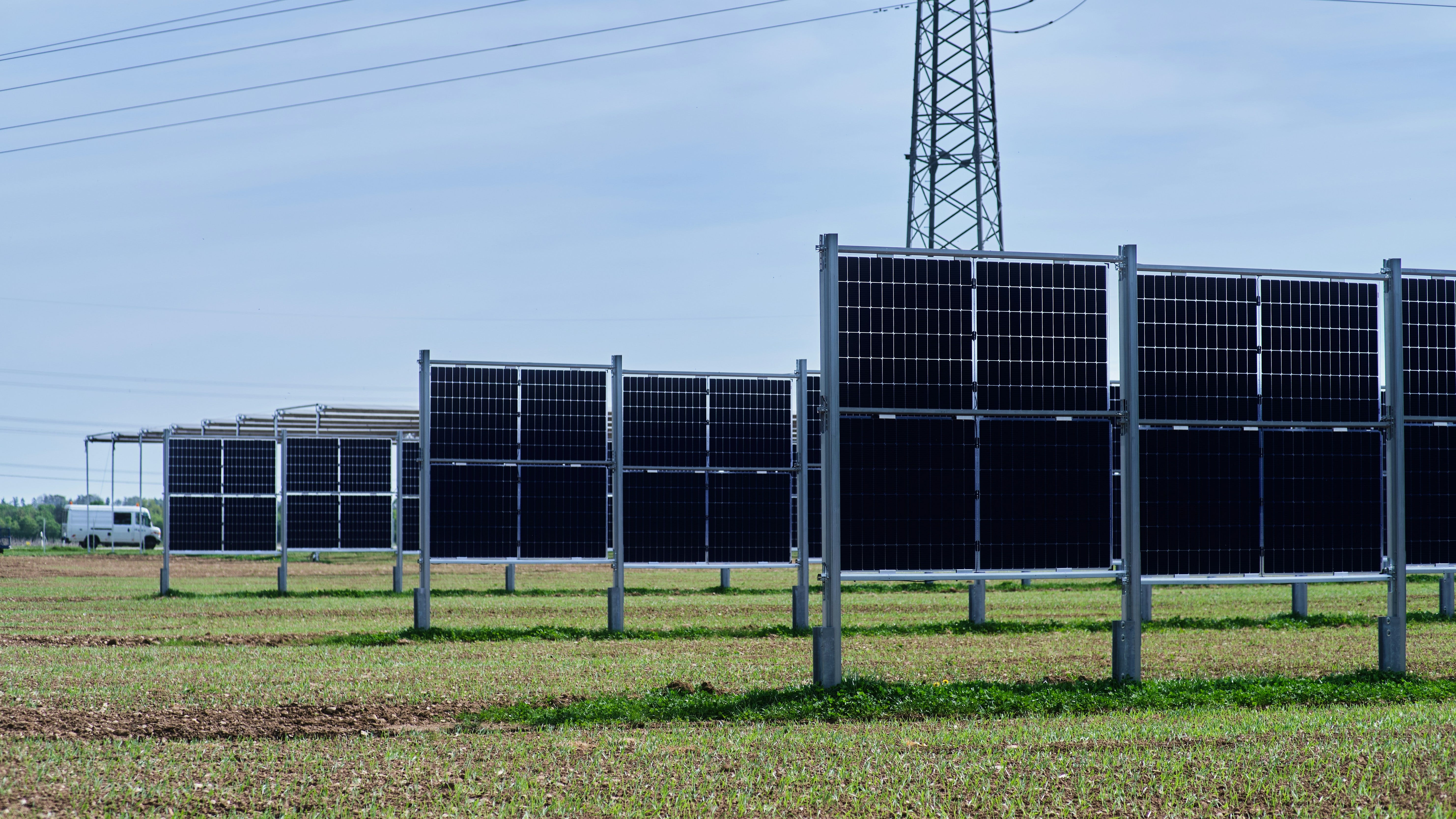
Today, around 80% of new electricity expansion globally is being met by solar, driven primarily by rapidly falling costs that have made it the cheapest form of new generation in most markets. Tech companies’ demand for power has exemplified this: Google, Microsoft and Amazon are now some of the largest corporate buyers of clean power globally. They are signing multi-gigawatt-scale power purchase agreements (PPAs), building co-located renewable facilities with storage, and stitching together long term supply arrangements that resemble the portfolios of traditional utilities.
The scale is remarkable. Corporate buyers signed deals for more than 100 GW of clean energy between 2014 and 2024, accounting for 41% of all clean energy capacity added to the U.S. grid over that decade. Meta claims nearly 5.2 GW of solar capacity, Amazon has more than 4.6 GW, and Google nearly 2.6 GW.
Hyperscalers are also experimenting with integrated clean energy campuses that bundle solar, wind, battery storage and backup generation in order to meet 24/7 carbon free energy targets. Google reported reaching 70% hourly matching of carbon-free energy in the U.S. in 2024, a move toward more rigorous time-matched procurement rather than pure annual matching.
The combination of unmatched demand and deep pockets is a boon for clean energy innovation and the resulting tech spillover into energy transition efforts outside the AI industry.
Fossil fuels won’t go away
Renewables, particularly solar, are clearly now the cheapest option for new power in most geographies. There are still bottlenecks and delays for deployment, especially considering broader constraints on grids that are ill-prepared for sudden, massive load growth. The IEA warns that up to 20% of planned data centre projects could be delayed specifically due to grid infrastructure constraints, while broader permitting and interconnection challenges add further delays.
In response, major technology companies have increasingly turned to fossil fuels (including on-site) to meet the explosive power demands of AI data centres, often despite pre-established environmental commitments. The result is a fossil fuel renaissance disguised as a temporary solution. Meta is planning a Louisiana data centre that will be powered by three new natural gas plants with 2.3 gigawatts of capacity, while ExxonMobil and Chevron have both entered the data centre power market for the first time, with Exxon planning to build natural gas plants specifically to power data centres. Between 2024 and 2030, nearly 50% of additional electricity generated for data centres globally is expected to come from fossil fuels, with natural gas growing 1.5 times faster than baseline projections. These new fossil fuel infrastructures will need to run for decades to justify the capital investment.
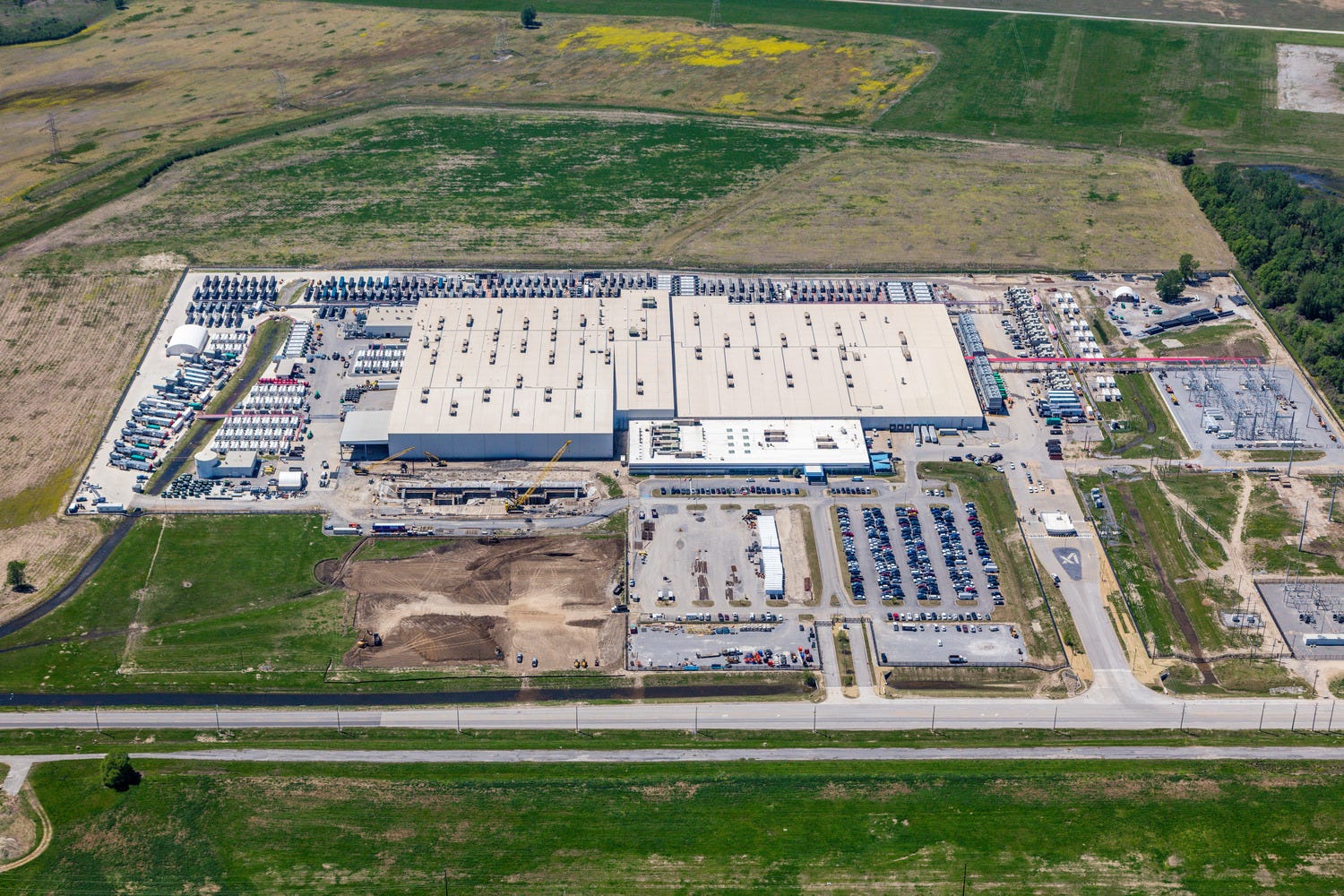
The Memphis xAI facility illustrates how quickly environmental safeguards can erode under competitive pressure. Aerial photographs revealed 35 methane gas turbines (more than double the 15 permitted) deployed by exploiting a loophole for “temporary” generators that exempted them from nitrogen oxide emission controls. The local community, predominantly low-income, were suddenly living next to an non-permitted power plant that emerged in months. The facility has since received limited permitting but continues to face legal challenges from environmental groups and the NAACP.
The same companies signing record-breaking renewable PPAs are also simultaneously building out fossil fuel infrastructure at scale. Google, Amazon, and Microsoft have all seen double-digit emissions growth in recent years, driven primarily by data centre expansion.
Location, location, location
When it comes to emissions, where a data centre sits on the grid matters more than the hardware inside it. For example, France’s largely nuclear and low-carbon grid gives many French sites far lower location-based emissions than comparable facilities in the United States or Ireland.
AI might be increasingly renewably powered, which is positive and a simple representation of current energy economics. The issue becomes that renewables growth is fuelling ever larger data centres, rather than decarbonising existing electricity or powering the electrification of dirty industries. Some estimates suggest that up to 25% of new renewables growth in France could become directed exclusively to data centres rather than decarbonising other parts of the economy.
Even if that generation can be built out, lags in the development of energy infrastructure can leave some data centres idle. Grid connections can take up to 10 years to reach full capacity after final approval, either due to technical or permitting constraints. In response, data centre operators often default to behind-the-meter, gas generation to come online faster.
The generalisation of the energy profile of AI is oversimplified and unhelpful in analysing the true impact of the technology. The emissions intensity of today’s data centres is dependent on location and economics, highlighting the reality of energy economics. Renewables are preferred, but fossil fuel generation continues to survive as a stop-gap before a more complete transition to carbon-free energy.
As demand for compute is projected to grow, hyperscalers are increasingly looking to new energy technologies. The following edition will examine these in more detail, including our conviction in the potential for fusion to be a serious commercial player in the 2030s.